



Remember — the best medical school for you is one that you can reasonably get into, aligns with your values, and where you feel confident you will succeed.
There’s no “best medical school” that applies to everyone, which is why our MedSchoolCoach advisors help students like you choose where to apply on a case-by-case basis.
We have listed below the 12 best medical schools in America based on average metrics like competitiveness, innovative teaching, and research techniques such as the ethical use of AI, as well as the performance of a school’s graduates.
Check out our other ranked school lists:
- The Most Popular Medical Schools (by number of applicants)
Note: Due to concerns with the ranking methodology and its implications, many medical and osteopathic schools have withdrawn from the U.S. News medical school rankings altogether. If a school on our list is missing a rank tier, it may be because they chose not to participate.
1. Mount Sinai Icahn School of Medicine

City: New York, New York
Selectiveness: 88/100
Median GPA: 3.95
Median MCAT: 520
In-State Tuition: $70,653
Out-of-State Tuition: $70,653
This innovative NYC med school tops our list because it became the first U.S. medical school to incorporate artificial intelligence (AI) throughout its training program in 2025. Mount Sinai’s Icahn SoM aims to teach future physicians how to use AI responsibly.
On top of this, Icahn boasts world-renowned faculty, breakthrough research opportunities, and an immersive curriculum.

City: Boston, MA
Selectiveness: 96/100
Median GPA: 3.97
Median MCAT: 521
In-State Tuition: $73,221
Out-of-State Tuition: $73,221
Harvard University’s medical program is not just one of the most recognized names in medicine. It’s among the most consistently innovative and prestigious. In 2025, it introduced a PhD track for “AI in Medicine,” as well as dedicated AI training for all incoming MD students.
From one of the largest medical libraries in the world to prestigious connections with hospitals and research institutions and an unmatched facility, this Massachusetts MD program provides best-in-class resources to its medical students.
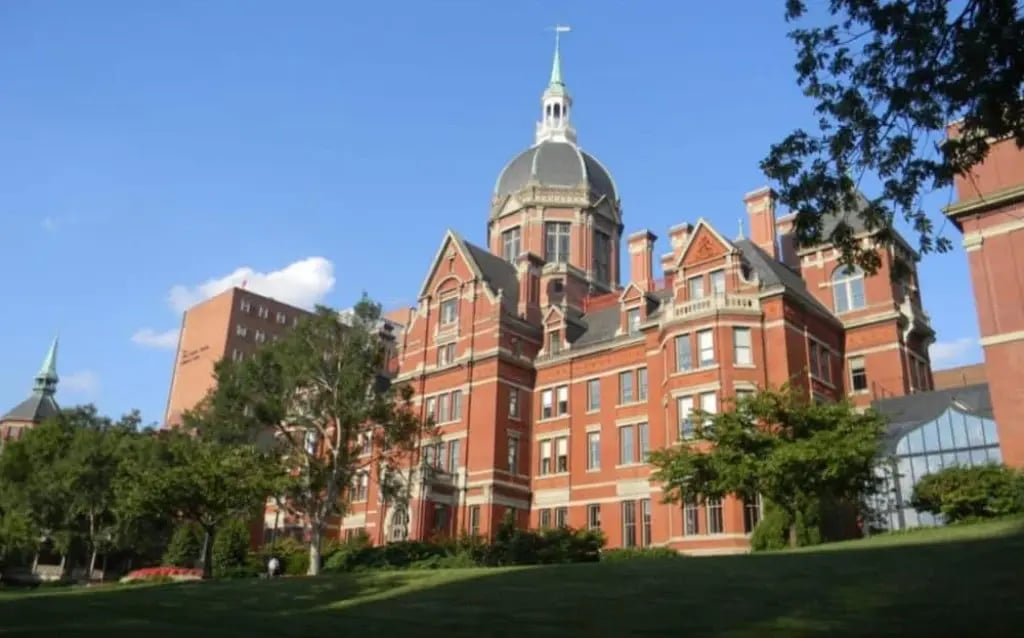
City: Baltimore, MD
Selectiveness: 99/100
Median GPA: 3.97
Median MCAT: 521
In-State Tuition: $66,874*
Out-of-State Tuition: $66,874*
*After a $1B donation from Mike Bloomberg, Johns Hopkins joins the ranks of (mostly) tuition-free medical programs. As one of the nation’s most prestigious medical schools, Johns Hopkins is a leader in medical research and has some of the biggest names in medicine on its faculty roster.
Its “Genes to Society” curriculum is a groundbreaking approach to medical learning based on learnings from the Human Genome Project. Johns Hopkins has been recognized worldwide as a leader in innovation for many decades. They were the first major SoM to admit women, use rubber gloves, and recently they’ve also embraced AI in Medicine.

City: Durham, NC
Selectiveness: 91/100
Median GPA: 3.91
Median MCAT: 520
In-State Tuition: $74,849
Out-of-State Tuition: $74,849
Instead of doing core clinical clerkships in the third year of medical school, Duke’s School of Medicine puts these in year two of medical education.
This condenses traditional training into three years instead of four, allowing students to pursue electives and independent interests before applying to residency.
Plus, Duke SoM incorporates collaborative learning between students, mentors, and medical field experts, as well as research into new fields like preventive dietary intervention, medical technology infrastructure, and generative machine learning.

City: Philadelphia, PA
Selectiveness: 98/100
Median GPA: 3.97
Median MCAT: 522
In-State Tuition: $74,687
Out-of-State Tuition: $74,687
The University of Pennsylvania Perelman School of Medicine is known for high research activity and quality clinical training. They emphasize small group, case-based learning. The Philadelphia school has added AI training to its curriculum since 2023.
Early clinical exposure is not all you can look forward to — Perelman’s innovative program requires students to complete multi-month scholarly projects with UPenn’s vast research capabilities.

City: New York City, NY
Selectiveness: 100/100
Median GPA: 3.97
Median MCAT: 523
In-State Tuition: $4,350*
Out-of-State Tuition: $4,350*
Grossman SOM was the first top-ranked medical school to offer free tuition to all students. They continue to offer innovative education options, including an accelerated 3-year program to allow qualified students to begin their medical careers an entire year early.
Grossman also uses a holistic application process to ensure students with the brightest potential are accepted, not just those with the best scores.
Just a note: Don’t confuse this with the NYU Grossman Long Island School of Medicine, which is also a great med school but not as competitive.

City: San Francisco, CA
Selectiveness: 88/100
Tier 1 in Primary Care
Tier 1 in Research
Median GPA: 3.92
Median MCAT: 517
In-State Tuition: $41,232
Out-of-State Tuition: $53,477
University of California San Francisco School of Medicine emphasizes early clinical experience, case-based learning, top-tier patient care, public health equity, and biomedical innovation.
Most coursework is graded Pass/Fail, besides some advanced electives.
UCSF SoM is a leader in embracing AI’s relationship to medical research, physician training, and clinical practice.

City: New Haven, CT
Selectiveness: 94/100
Tier 1 in Research
Median GPA: 3.96
Median MCAT: 522
In-State Tuition: $73,495
Out-of-State Tuition: $73,495
Yale University School of Medicine is known for its unique educational philosophy called the “Yale System” that emphasizes independent learning. Testing is anonymous, and students see virtually no traditional grading for the first 18 months.
They offer a tuition-free Flex Year between the third and fourth year of medical training, so that students have the option to focus on research, clinical training, or dual-degree pursuits.
Yale is hesitant to fully embrace AI in its curriculum. Let’s say Yale is on the cutting edge of questioning AI’s ethical usage in medicine.
“We’re very excited about what generative AI can do, but it’s important for us to assess it before it’s implemented,” said Melissa Davis, vice chair of medical informatics in Yale’s Department of Radiology and Biomedical Imaging.
Davis and her team found racial disparities in how ChatGPT generated information, including lowering the reading level of patient reports meant for Black patients. As Davis put it, “The question is what other kinds of biases will surface in the future?”
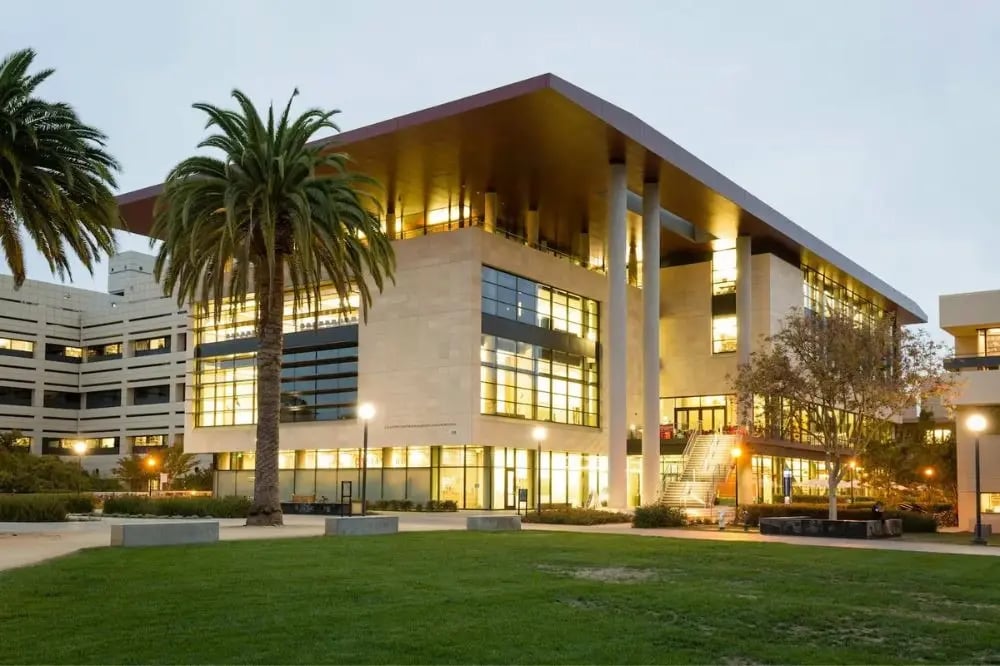
City: Stanford, CA
Selectiveness: 88/100
Median GPA: 3.95
Median MCAT: 520
In-State Tuition: $68,492
Out-of-State Tuition: $68,492
Known for cutting-edge research, innovation, and a highly selective program, Stanford’s School of Medicine lets students dive into clinical experiences from the first year via its Early Clinical Engagement and Practice of Medicine threads.
Stanford SoM recently appointed a Director of Medical Education in Artificial Intelligence, signalling their commitment to innovating AI’s relationship to medicine. New students will learn to leverage AI for patient care while learning its limitations.
With a Pass/Fail grading system, Stanford University SoM has eliminated internal student ranking by grade. This innovative medical school also offers students frequent collaboration with Silicon Valley industries to push the medical field into the future.

City: Ann Arbor, MI
Selectiveness: 85/100
Median GPA: 3.92
Median MCAT: 517
In-State Tuition: $55,968
Out-of-State Tuition: $75,822
The University of Michigan Medical School offers a cutting-edge “Trunks and Branches” curriculum that integrates clinical exposure from month one.
The pre-clinical grading system is Pass/Fail and shifts to Honors/High Pass/Pass/Fail, eliminating class rankings and reducing stress. Their Center for Surgical Innovation seeks “cutting-edge solutions to clinical care, research, and education with an emphasis on thinking outside the box.”

City: Cleveland, OH
Selectiveness: 80/100
Tier 1 in Research
Median GPA: 3.93
Median MCAT: 518
In-State Tuition: $72,762*
Out-of-State Tuition: $72,762*
All students who attend the Cleveland Clinic Lerner College of Medicine (CCLCM), which works with Case Western Reserve University, are offered a full-tuition scholarship. It’s prestigious, forward-thinking, and research-focused.
Case Western has started using Microsoft’s augmented reality (AR) technology to replace cadaver-based learning. Now students view 3D holograms of human organs and systems in incredible detail to learn anatomy faster, more interactively, and more sustainably.
They offer an optional 5-year program incorporating a special research component into the MD track, which offers graduating students a special qualification in biomedical research.

City: Nashville, TN
Selectiveness: 93/100
Tier 1 in Research
Median GPA: 3.97
Median MCAT: 522
In-State Tuition: $70,660
Out-of-State Tuition: $70,660
Located in the heart of Nashville, Vanderbilt University’s School of Medicine emphasizes active learning, early clinical immersion, and integrated science throughout all four years of medical training. Grading in the first year is Pass/Fail, supporting a collaborative environment.
Vanderbilt offers strong clerkship experiences at its top-tier medical center. They also provide generous scholarships.
In 2024, the Department of Biomedical Informatics at Vanderbilt University Medical Center launched the ADVANCE Center — which stands for AI Discovery and Vigilance to Accelerate Innovation and Clinical Excellence — demonstrating commitment to AI in medicine.
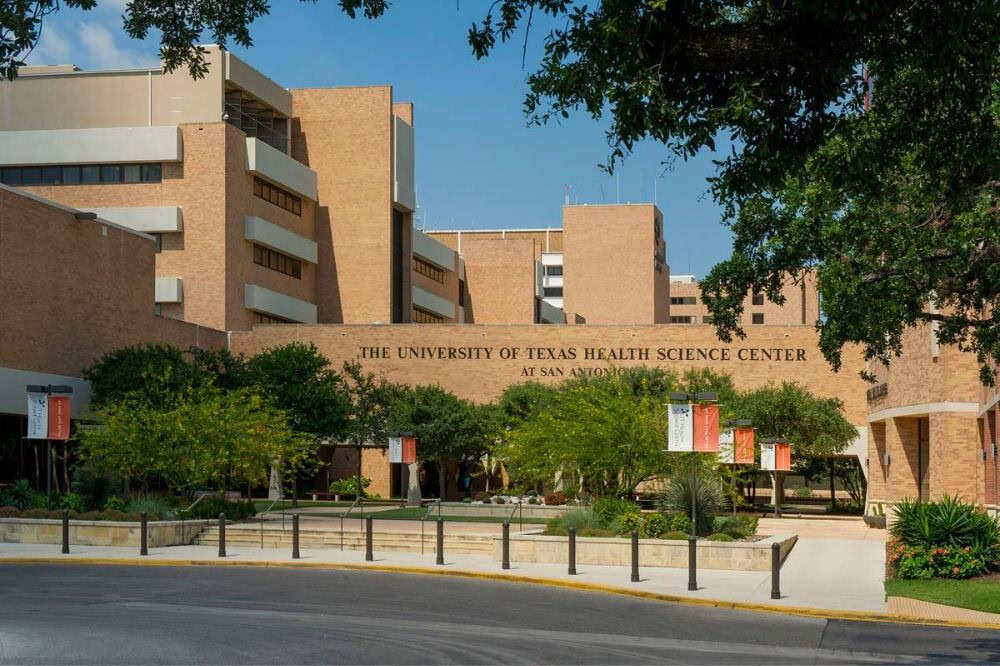
City: San Antonio, TX
Selectiveness: 72/100
Tier 2 in Research
Tier 2 in Primary Care
Median GPA: 3.95
Median MCAT: 519
In-State Tuition: $26,619
Out-of-State Tuition: $42,035
The University of Texas Health Science Center at San Antonio Joe R. and Teresa Lozano Long School of Medicine is a public institution with innovative goals. They launched one of the nation’s first dual-degree programs in combining an MD with a Master’s in AI.
Starting in 2023, these dual-degree students have been able to take a year between clinical training to dive deep into AI. They study advanced data science, machine learning, and patient care applications and limitations.

City: Tampa, FL
Selectiveness: 70/100
Tier 1 in Research
Median GPA: 3.96
Median MCAT: 520
In-State Tuition: $33,726
Out-of-State Tuition: $54,916
University of South Florida’s Morsani College of Medicine features small-group, case-based, evidence-based curriculum that strips away traditional lectures and introduces clinical skills from day one.
It employs a multi-tiered H/PC/P/F grading system across all four years, designed to reduce competition and stress. USF offers competitive in-state tuition, so Florida residents can get a great medical education for half of what other top-tiers are charging.
Runners-Up
These are standout medical programs in their own right. Below are other programs I often hear fantastic things about:
- Meharry Medical College (Nashville, TN) — A prominent historically Black medical school that trains 10% of all Black physicians in the United States.
- Mayo Clinic Alix School of Medicine (Rochester, MN) — Distinctive because of its integration with Minnesota’s Mayo Clinic, providing best-in-class clinical training.
- University of Virginia School of Medicine (Charlottesville, VA) — A well-established med school that has incorporated AI into its clinical curriculum and diagnostic education.
- Columbia University Vagelos College of Physicians and Surgeons (New York, NY) — Recognized for its research initiatives.
- Washington University School of Medicine in St. Louis (St. Louis, MO) — Offers excellent research opportunities and clinical education.
- Hofstra University Zucker School of Medicine (Hempstead, NY) — Using a unique curriculum known as PEARLS, Zucker minimizes lecture time to increase critical thinking.
- Albert Einstein College of Medicine (Bronx, NY) — This prestigious medical college is now completely tuition-free.
Read Next:
- Applying to Med School as a Non-Traditional Applicant
- Medical Ethics in the Med School Admissions Process
- What Are MD-PhD Programs? Overview & Program List
FAQs
Fewer than half of applicants to medical programs are accepted in any given application cycle. It’s one of the most competitive professions in the world, and for good reason.
I’ve worked with thousands of students to improve their scores and applications to really stand out among the crowd. Here are my best tips and resources for increasing your chances at that coveted “Yes!”:
- Familiarize yourself with the application process. Plan ahead to take the MCAT, get shadowing hours, get clinical experience, plan extracurriculars, and write the various parts of your application with plenty of time to spare. Applicants who apply near the beginning of the cycle have the best shot at getting into med school, even with less impressive scores. Read our guides on applying via AMCAS (for MD schools), AACOMAS (for DO schools), and TMDSAS (for medical programs in Texas).
- Work closely with your pre-med advisor on prerequisites. You both can make sure you are on track to meet the specific requirements for the schools where you’ll apply. Each medical school’s admission requirements vary slightly, so be careful to understand and use the AAMC’s MSAR database before getting too close to the end of your undergraduate career.
- Develop a comprehensive, personalized MCAT study schedule. Focus on the highest-yield topics. Your MCAT score will often be a make-or-break part of your application. While the average of all matriculants is usually around 511, you’ll notice that these top programs all have average MCAT scores far beyond that. I also recommend working with an MCAT tutor, as this will result in a significantly higher score; our tutoring students score 12 points higher on average than their practice test or previous scores.
- Choose the schools you apply to wisely. Applying to every Ivy League medical school won’t matter if your MCAT score and GPA just aren’t competitive. However, there are plenty of medical programs where you may have a good shot. Use our Med School Chance Predictor to get a good feel for which schools are a good match for you so that you can build your school list with confidence.
- Make the most of your personal statement and Works & Activities section. A major part of advising applicants is customizing these sections, allowing for more essay-format answers highlighting their unique strengths. Here are a few personal statement examples to help you get started.
- Utilize a gap year for post-bacc. If you switched to pre-med later in undergrad and are missing credits, or if you have a GPA on the low end (under 3.6), consider taking a year after graduation to complete a post-bacc program.
- Do extensive interview prep. About half of the students AdComs request for interviews will get into the program for which they’re interviewing. Make sure you know the best strategies for traditional interviews, how to answer common interview questions, and what to do during an MMI interview.
- Work with MedSchoolCoach. I may be biased, but I’ve watched our Physician Advisors help students consistently double their chances of getting into medical school for years. I can tell you that medical school admissions consulting is one of the most valuable investments you and your family can make for your future.
Our tutoring students increase their practice exam or previous MCAT scores by 12+ points on average, which can be the difference between acceptance and rejection.
According to research from U.S. News & World Report, the most diverse medical schools in the United States, in order, are:
- Morehouse School of Medicine (Atlanta, GA)
- Meharry Medical College (Nashville, TN)
- Howard University College of Medicine (Washington, D.C.)
- University of California, Davis School of Medicine (Sacramento, CA)
- University of New Mexico School of Medicine (Albuquerque, NM)
- Florida International University Herbert Wertheim College of Medicine (Miami, FL)
- University of California Riverside School of Medicine (Riverside, CA)
- University of California San Francisco School of Medicine (San Francisco, CA)
- Nova Southeastern University Patel College of Allopathic Medicine (Ft. Lauderdale, FL)
Harvard Medical School is frequently considered the “best” medical school by reputation, followed by Johns Hopkins, UPenn, NYU Grossman, and Yale. However, they aren’t necessarily better than other medical programs in terms of curriculum, education, or opportunities.
There’s just no such thing as the #1 medical school that applies to everyone’s situation; it varies person by person.
By order of lowest acceptance rates, these are the 10 hardest medical schools to get into:
- Texas Christian University — 2.38% acceptance rate
- University of California Riverside — 2.44% acceptance rate
- University of California San Diego — 2.88% acceptance rate
- Oklahoma State University — 2.96% acceptance rate
- Dartmouth College (NH) — 3.06% acceptance rate
- University of California Davis — 3.10% acceptance rate
- University of California San Francisco — 3.10% acceptance rate
- University of Arizona Tucson — 3.15% acceptance rate
- Emory University (GA) — 3.22% acceptance rate
- University of California Los Angeles — 3.29% acceptance rate
However, you won’t get deeply into any one specialty until residency, and most medical students apply to residency programs across multiple specialties no matter their school. I would not recommend developing a school list centered around a specific specialty.
After previous years of backlash about an unfair ranking system, U.S. News has changed its ratings to a four-tier system, broken into two lists (one for research and the other for primary care).
Tier 1 is considered the highest-performing category, whereas Tier 4 programs are the lowest. Within those rankings, schools are listed in alphabetical order on their website (no longer ranked one by one).